
Main Courses
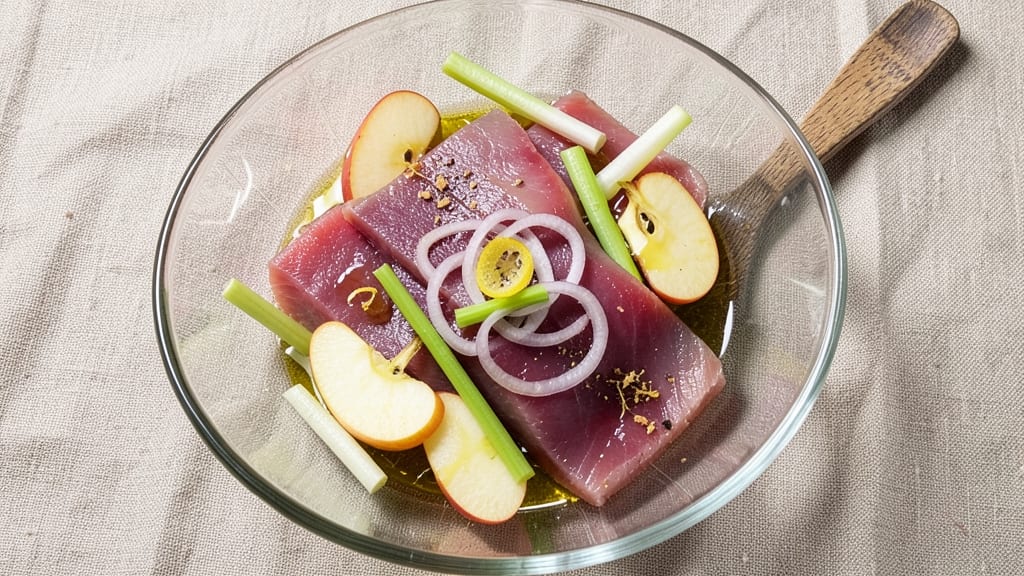
This tuna and apple recipe transforms simple ingredients into a sophisticated pescatarian dish where crisp apples and tender tuna create the perfect sweet-savory balance. The secret lies in thinly slicing the apples for texture and using just enough lemon to brighten the tuna without overpowering its natural richness.
I developed this recipe after years of experimenting with tuna salads—most versions rely too heavily on mayo, but this one shines with freshness and crunch.
The foundation of this dish is crisp celery and apple slices, which add a satisfying bite that contrasts beautifully with the flaky tuna. A light vinaigrette ties everything together, ensuring each component stands out while working as a cohesive whole.
Unlike traditional tuna salads, this version skips the heavy dressing, making it lighter yet equally flavorful—ideal for lunch or a light dinner.
What makes this recipe truly special is how the flavors evolve as you eat it: the first bite delivers crisp apple and celery, followed by the clean, slightly briny tuna, and finished with a tangy dressing that cuts through the richness.
The result is a dish that feels both elegant and effortless, perfect for meal prep or a last-minute lunch. Every ingredient plays a role, and nothing feels unnecessary.
Pair it with a simple side of quinoa or crusty bread to round out the meal, or serve it as-is for a refreshing, protein-packed dish. The technique is straightforward—no fancy equipment required—just attention to texture and balance. Let’s get started on creating a tuna salad that’s anything but ordinary.
Ingredients for tuna and apple
Fresh tuna, crisp apples, and bright herbs create a sophisticated salad without mayo.
| Ingredient | Amount | Notes |
|---|---|---|
| Sushi-Grade Ahi Tuna 🐟 | 1 lb | Freshly sliced into 1/4-inch pieces |
| Honeycrisp Apples 🍎 | 2 medium | Thinly sliced, seeds removed |
| Celery Stalks 🧅 | 3 whole | Thinly sliced on the diagonal |
| Red Onion 🧅 | 1 small | Thinly sliced, white parts only |
| Extra-Virgin Olive Oil 🫒 | ¼ cup | Light, fruity variety preferred |
| Fresh Lemon Juice 🍋 | 2 tbsp | From 1 medium lemon |
| Dijon Mustard 🧂 | 1 tbsp | Mild or medium heat |
| Fresh Dill 🌿 | ¼ cup | Chopped, stems removed |
| Fresh Chives 🌱 | 2 tbsp | Minced for garnish |
| Diamond Crystal Kosher Salt 🧂 | ½ tsp | Fine grain preferred |
| Freshly Ground Black Pepper 🌶️ | ¼ tsp | Cracked peppercorns preferred |
| Toasted Walnuts 🥜 | ¼ cup | Chopped, for crunch |
| Unsweetened Greek Yogurt 🥛 | 2 tbsp | Full-fat for creaminess |
The tuna must be sushi-grade—no substitutions here. Look for it at Whole Foods or well-stocked seafood counters where they keep it on ice. Honeycrisp apples are ideal for their crispness, but Fuji or Gala work too if that's what's available. The celery should be firm with no brown spots—organic celery from the outer rings is often cheaper. For the red onion, avoid the root end where it gets bitter. Thinly slicing the apples and celery is key; a mandoline makes this easy, but a sharp chef's knife works too.
No Dijon mustard? Whole-grain mustard at half the amount adds texture but less tang. Short on walnuts? Toasted pecans or almonds give a similar crunch. The Greek yogurt replaces mayo—full-fat is crucial for that creamy texture without heaviness. Fresh dill and chives are non-negotiable for brightness, but if you're out, substitute with parsley at double the amount. The olive oil matters too—skip the cheap stuff; California avocado oil is a great alternative if you prefer a neutral flavor.
Store the tuna in its original packaging with a paper towel on top—use within 2 days for best texture. Apples and celery keep 5-7 days wrapped in damp paper towels. The dressing components (olive oil, lemon, mustard) stay fresh for 1 week in the fridge. For meal prep, assemble the salad just before serving to maintain crispness. The walnuts can be toasted ahead and stored in an airtight container for 1 month—just crush them lightly before adding.
Why You'll Love This Recipe
- No-Cook Magic: I swear by this when I’m too hot to turn on the stove—just slice the tuna and apple thin, toss with a drizzle of olive oil, and let the sharpness of the red onion cut through the sweetness. Five minutes, zero heat, and it still feels like a meal.
- Sweet-Savory Balance: That first bite? The crisp Honeycrisp holds up against the rich tuna, while the celery adds a refreshing crunch that keeps it from feeling heavy. Honestly, it’s the kind of combo that makes you question why you ever ate tuna salad with mayo.
- Lunchbox Legend: Pack it in mason jars or wrap it in foil—this holds up for days without getting soggy. My kids actually eat their veggies when it’s hidden in here, and I still get to enjoy the fancy bits. (Yes, even on a Tuesday.)
- Budget Luxury: Ahi tuna feels indulgent, but a single steak stretches across two meals when paired with apples and celery. I’ll be real: this is my go-to when I want to feel fancy without breaking the bank. The olive oil ties it all together without costing a fortune.
Step-by-step instructions for tuna and apple salad
This method delivers a perfectly balanced salad where crisp apple and celery complement tender tuna without overpowering flavors.
Prepare the Vegetable Base
In a large mixing bowl, combine the thinly sliced honeycrisp apples, diagonally sliced celery stalks, and thinly sliced white parts of the red onion. The Honeycrisp apples should be firm but yielding to the knife—this variety holds its shape while adding sweetness that cuts through the tuna's richness. Toss the vegetables gently to distribute them evenly without bruising.
Add the chopped fresh dill and minced fresh chives to the bowl. These herbs provide bright, aromatic notes that elevate the salad's complexity. Stir again to ensure the dill and chives are evenly distributed throughout the vegetable mixture. The herbs should be visible but not overpowering—think of them as flavor accents rather than the main event.
Create the Yogurt-Lemon Dressing
In a small bowl, whisk together the 2 tablespoons of unsweetened Greek yogurt, 2 tablespoons of fresh lemon juice, and 1 tablespoon of Dijon mustard until completely smooth. The yogurt should be full-fat for creaminess, and the lemon juice should be freshly squeezed to maintain bright acidity. This combination creates a tangy base that won't overpower the delicate tuna flavor.
Gradually drizzle in the 0.25 cup of extra-virgin olive oil while continuing to whisk. The dressing should emulsify into a light, pourable consistency—similar to a vinaigrette but with a creamy texture. If it thickens too much, add 1 teaspoon of water at a time until it reaches a smooth, spoonable consistency. This dressing is the heart of the salad, binding all ingredients together without heaviness.
Combine Tuna and Dressing
Add the freshly sliced sushi-grade ahi tuna to the vegetable mixture. The tuna should be cut into 1/4-inch pieces for even cooking and proper texture. Sprinkle the tuna with 0.5 teaspoon of Diamond Crystal kosher salt and 0.25 teaspoon of freshly ground black pepper, then gently toss to coat. The salt should adhere to the tuna's surface, enhancing its natural flavor without overpowering it.
Pour the yogurt-lemon dressing over the tuna and vegetables, then gently fold everything together with a silicone spatula. Be careful not to overmix—the tuna should remain tender and distinct. The salad should look vibrant with the bright colors of the vegetables peeking through the creamy dressing. Let it sit for 5 minutes to allow the flavors to meld together before serving.
Add Walnuts and Final Touches
Just before serving, sprinkle the chopped toasted walnuts over the salad. The walnuts should be toasted to a light golden color for maximum flavor and crunch. Toss gently to distribute them evenly throughout the salad. These nuts add a satisfying texture contrast and a subtle earthy sweetness that complements the apple's crispness.
Taste and adjust seasoning if needed—you might want to add a pinch more salt or a squeeze of lemon juice to balance the flavors. Serve immediately while the tuna is still fresh and the vegetables retain their crisp texture. This salad shines when enjoyed at room temperature, allowing all the flavors to harmonize perfectly.
Pro Tips For Making Tuna And Apple
- Slice Tuna Thinly: Grab a sharp knife and slice the ahi tuna against the grain—about ¼-inch thick. Thicker pieces get chewy fast, and this recipe needs that delicate, tender texture. I used to cut with the grain, and the result was disappointing. Trust me, the knife work matters more than you’d think.
- Core the Apples: Peel, then core the Honeycrisp apples using a small melon baller or spoon—leave the skin on for texture. Whole apples won’t soften evenly, and you’ll end up with a mushy center that throws off the whole dish. Sounds tedious, but it’s the thing that makes this recipe actually work.
- Dry the Tuna First: Pat the ahi tuna bone-dry with paper towels before searing—no exceptions. Wet surfaces steam instead of sear, and you’ll end up with sad, gray fish instead of that perfect caramelized crust. I learned this the hard way after a soggy batch ruined my lunch.
- Toast the Celery: Lightly char the celery stalks in olive oil for 2-3 minutes before dicing—just until the edges turn golden. It adds a smoky depth that cuts through the sweetness of the apples and balances the richness of the tuna. Skip this, and you’re missing a flavor layer that makes the dish sing.
Perfect pairings for this recipe
Crusty Bread Pairing
Serve this tuna salad with a warm, crusty baguette or sourdough loaf for dipping and scooping. Look for a baguette from a local bakery—it should have a crisp exterior and soft, airy interior.
I love Brioche for its buttery richness, but even a simple whole wheat baguette adds hearty texture. Toast the bread lightly before serving to enhance its crunch and help it absorb any leftover dressing. 🥖
Quinoa Side Salad
Pair your tuna salad with a cucumber-quinoa salad for a complete meal. Cook 1 cup quinoa according to package instructions, then toss with 1 cup diced cucumber, 2 tbsp chopped mint, 1 tbsp olive oil, and a pinch of salt.
The quinoa adds protein and fiber, while the cucumber keeps the dish light. This combo balances the richness of the tuna perfectly.
Wine Pairings
A crisp Sauvignon Blanc from New Zealand or Loire Valley is ideal—its citrus notes complement the lemon dressing and apple sweetness. I recommend Cloudy Bay Sauvignon Blanc for its bright acidity.
For a lighter option, try a Pinot Grigio from Italy, which won’t overpower the delicate tuna flavors. Avoid heavy reds or oaky whites that could clash with the dish’s freshness. 🍷
Beer Pairings
A refreshing wheat beer like Blue Moon or Hoegaarden works beautifully—its citrusy notes echo the lemon in the dressing. For a hoppier option, try a light lager like Heineken or Peroni, which cleanses the palate between bites.
Avoid dark beers or IPAs, as their bold flavors might compete with the salad’s delicate balance.
Garnish Upgrades
Add a final touch with edible flowers like nasturtiums for a pop of color and peppery bite. Or drizzle with truffle oil (just ½ teaspoon) for an earthy depth.
For a sweet contrast, sprinkle with crystallized ginger or a pinch of smoked paprika. These garnishes elevate the dish without overpowering the natural flavors. ✨
Seasonal Variations
In fall, swap apples for pear slices and add candied walnuts for warmth. In spring, use asparagus spears and radish slices for freshness. For summer, add cherry tomatoes and basil** to the dressing. Each season brings new textures and flavors that keep this dish exciting year-round. 🍎🌿
Nutrition facts
Frequently asked questions
Can I use canned tuna instead of sushi-grade ahi?
While you can substitute canned tuna, the texture and flavor will differ significantly. Canned tuna is pre-cooked and has a firmer, denser texture that won't complement the crisp apple slices as well. If using canned, opt for high-quality, low-sodium varieties and drain thoroughly. For best results, flake the tuna with your hands to mimic the tender pieces of fresh ahi.
How do I prevent the apples from turning brown?
Toss the sliced apples with 1 tablespoon of fresh lemon juice immediately after cutting to prevent browning. This acidic barrier slows oxidation. Store any prepped apples in an airtight container with a damp paper towel to maintain crispness. For extra insurance, you can also sprinkle a pinch of salt over the apples before mixing with other ingredients.
What if I don't have Greek yogurt?
You can substitute with 2 tablespoons of light mayo or 1 tablespoon of sour cream for creaminess. For a dairy-free option, use 2 tablespoons of vegan yogurt or even a blend of 1 tablespoon silken tofu and 1 tablespoon lemon juice. The texture will be slightly different, but the flavor balance will remain intact.
Can I make this ahead of time?
Prepare the salad components separately and store them in airtight containers. Keep the tuna and dressing in one container, and the apples, celery, and nuts in another. Assemble just before serving to maintain crispness. The dressing can be made up to 3 days in advance, while the vegetables stay fresh for 2 days if stored properly.
Is this recipe kid-friendly?
With some adjustments, yes! Serve the tuna and apple salad without the walnuts (or chop them very finely) and reduce the lemon juice slightly to mellow the flavors. You can also mix in ½ cup shredded carrots or ¼ cup raisins for added sweetness. Always check for any allergies to seafood or nuts before serving to children.