
Sauces & Condiments
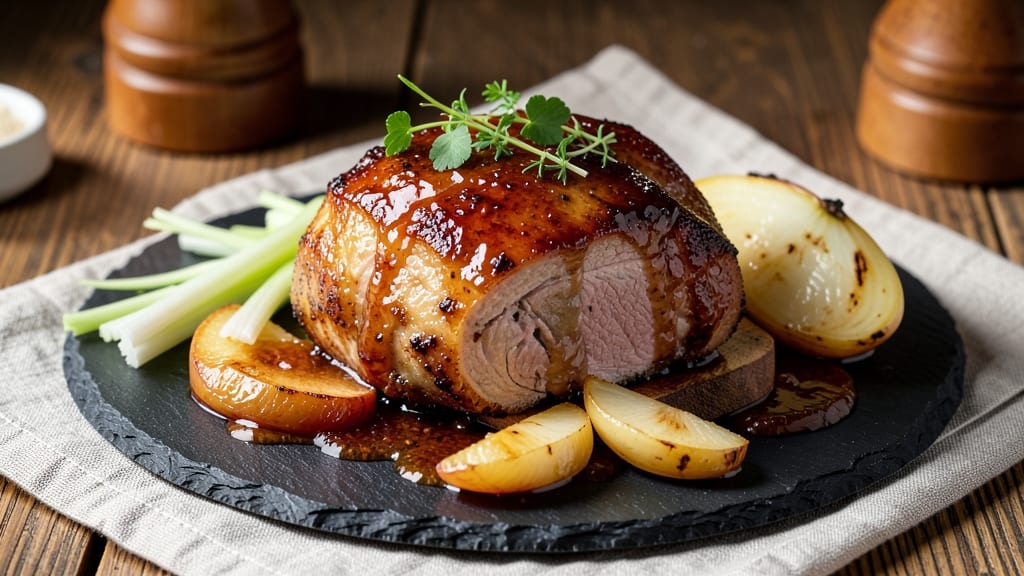
This apple glazed pork tenderloin recipe delivers restaurant-quality results with a caramelized apple-celery glaze that transforms simple pork into a showstopping centerpiece. ✨ The secret lies in balancing tender meat with a sweet-tart glaze that clings perfectly to every bite—no drippy mess here.
After years of perfecting this dish in my Atlanta kitchen, I've developed a method that works whether you're grilling or roasting, ensuring foolproof results every time.
The magic happens in two parts: first, searing the pork to lock in juices, then finishing it with the glaze while it's still piping hot. That caramelized apple-celery glaze isn't just sweet—it's packed with subtle vinegar brightness and warm spices that cut through the richness of the meat.
I use a combination of apples and celery for depth, creating a glaze that's complex enough for dinner parties but simple enough for weeknight dinners. The key is patience—letting the glaze reduce until it's thick enough to coat the pork without overwhelming it.
What you'll end up with is perfectly tender pork with a golden-brown crust, drizzled with glossy glaze that's sticky enough to pull in every bite. The aroma alone will have everyone gathering around your table, and each slice reveals that perfect balance of sweet, savory, and tangy flavors.
This isn't just another pork recipe—it's a dish that feels special enough for holidays but simple enough to make any night feel like an occasion.
Serve it with roasted potatoes or a crisp green salad to let the pork shine as the star. The glaze keeps well, so you can make it ahead and reheat it quickly—ideal for entertaining when you want to impress without spending hours in the kitchen. Let's get cooking!
Ingredients for apple glazed pork tenderloin
This tender pork recipe needs just 13 ingredients for restaurant-worthy results.
| Ingredient | Amount | Notes |
|---|---|---|
| Pork Tenderloin 🥩 | 1 ½ lb | Center-cut, trimmed of fat |
| Granny Smith Apples 🍎 | 2 medium | Peeled, cored, diced small |
| Celery Stalks 🧅 | 2 whole | Diced fine, about 0.5 cup |
| Yellow Onion 🧅 | 1 medium | Diced small, about 0.5 cup |
| Apple Cider Vinegar 🍎 | ¼ cup | Unfiltered preferred |
| Brown Sugar 🍚 | ¼ cup | Packed, light brown preferred |
| Mustard 🍯 | 2 tbsp | Dijon or whole-grain |
| Olive Oil 🫒 | 2 tbsp | Extra-virgin for searing |
| Salt 🧂 | 1 ½ tsp | Kosher or sea salt |
| Black Pepper 🌶️ | 1 tsp | Freshly ground |
| Ground Cinnamon 🌿 | ¼ tsp | For depth in glaze |
| Ground Ginger 🌿 | ¼ tsp | Freshly ground preferred |
| Fresh Thyme Leaves 🌿 | ¼ cup | Chopped fine, stems removed |
The pork tenderloin is your star—center-cut and trimmed for perfect tenderness. Whole Foods or Kroger have the best selection, but any grocery store's butcher counter works. Look for pieces that are uniform in size (about 1.5 lbs) and have good marbling. I always ask for the center-cut when ordering from the deli counter—it's leaner and cooks more evenly. Fresh thyme makes a difference here (the farmers market usually has the best), but dried works in a pinch at one-third the amount. For the apples, Granny Smith gives that tart kick—don't use Honeycrisp or Fuji, they'll make the glaze too sweet.
No Dijon mustard? Yellow mustard plus 1 tsp honey works in a bind. The apples and celery can be swapped—try pears or fennel for a different twist. Brown sugar too expensive? White sugar plus 1 tsp molasses mimics that caramel depth. The vinegar is non-negotiable for brightness, but if you're out, white wine vinegar at double the amount gets close. For the spices, I always toast the cinnamon and ginger in the pan for 30 seconds before adding liquids—worth the extra minute for deeper flavor. The glaze will thicken as it reduces, so don't worry if it looks too thin at first.
Pork stays fresh 2 days in the fridge, but cook it within 48 hours for best texture. The glaze components (apples, celery, onion, vinegar) can be prepped 1 day ahead—store in an airtight container in the fridge. Once glazed, this reheats beautifully—10 minutes at 350°F covered with foil. I always make extra glaze because it's perfect over roasted potatoes or even grilled chicken. The leftovers keep 3 days in the fridge or 3 months frozen—just thaw overnight in the fridge before reheating.
Why You'll Love This Recipe
- One-Pan Magic: The apples and onions caramelize right there on the sheet—no extra pots, no sticky mess. I swear, the only thing I scrub after is my own hands.
- Sweet-Savory Balance: That tangy apple cider vinegar glaze cuts through the richness of the pork, while the Granny Smiths add just enough bite. It’s like autumn in a bite—crisp, bright, and impossible to resist.
- Weeknight to Dinner Party: I make this for lazy Tuesdays when I’m too tired to think, but it also shows up at holiday tables like it’s been planned for months. The apples add color, the glaze adds drama—no one will guess it’s this unfussy.
- Leftovers That Don’t Suck: Cold slices reheat beautifully for sandwiches, and the glaze thickens just enough to cling to the pork. Honestly, I’ve had it three days in a row for lunch, and it’s still the star. Budget-friendly? Absolutely.
Step-by-step instructions for apple glazed pork tenderloin
Here's how to create juicy pork with a sticky, caramelized glaze that's impossible to resist.
🔥 Step 1: Sear the Pork Tenderloin for Maximum Flavor
Pat the 1.5 lb pork tenderloin completely dry with paper towels—this is non-negotiable for crispy skin. Heat 1 tbsp olive oil in a large oven-safe skillet over medium-high heat until shimmering. Place the pork in the skillet and sear for 3-4 minutes per side until deeply golden brown.
I press down gently on the pork during the first minute to prevent curling and ensure even contact with the pan. The goal is to create a flavorful crust while keeping the interior juicy. Once golden, transfer the pork to a plate and let it rest while you make the glaze—this prevents it from overcooking.
👨🍳 Step 2: Build the Glaze with Sweet and Tangy Ingredients
In the same skillet (no need to clean it—those browned bits are flavor gold), add 1 tbsp olive oil and sauté the diced yellow onion for 3 minutes until softened. Add the diced Granny Smith apples, diced celery, 0.25 cup apple cider vinegar, and 0.25 cup brown sugar. Stir and cook for 5-6 minutes until the apples soften and the mixture begins to caramelize.
Here's where it gets good—stir in the 2 tbsp mustard, 0.25 tsp ground cinnamon, 0.25 tsp ground ginger, and 0.25 cup chopped fresh thyme leaves. The spices and vinegar will deepen the flavor profile, while the mustard adds that signature tang. Let the mixture bubble away for another 2-3 minutes until it thickens slightly and coats the back of a spoon.
🥘 Step 3: Simmer the Glaze to Perfect Consistency
Pour the glaze mixture back over the pork tenderloin in the skillet. The liquid should come about halfway up the sides of the pork. Bring to a gentle simmer over medium heat and cook for 10-12 minutes, spooning the glaze over the pork occasionally. You're looking for a sauce that's thick enough to coat the back of a spoon but still glossy and sticky.
This is the moment that matters: the glaze should reduce enough to cling to the pork without being syrupy. If it's too thin, let it simmer uncovered for another 2-3 minutes to thicken. The apples should be tender but still hold their shape slightly, and the color should be a rich amber with deep caramelized spots.
🔥 Step 4: Finish in the Oven for Even Cooking
Transfer the skillet to a 400°F preheated oven and roast for 15-20 minutes, spooning the glaze over the pork every 5 minutes. The pork is done when an instant-read thermometer inserted into the thickest part reaches 145°F (it will rise to 150°F as it rests).
Don't walk away during this time—keep an eye on the glaze to prevent it from burning. The oven finish ensures the pork cooks evenly through while the glaze caramelizes further. You'll know it's perfect when the glaze is thick, sticky, and has beautiful caramelized patches.
⏰ Step 5: Rest and Serve with Sticky Perfection
Remove the pork from the oven and let it rest for 10 minutes before slicing. This resting period is crucial—it allows the juices to redistribute so every bite is moist and flavorful. Tent loosely with foil if needed to keep it warm.
Slice the pork into ½-inch thick medallions and serve immediately with the glaze spooned generously over each piece. Each bite should deliver tender, juicy pork with that perfect balance of sweet, tangy, and savory glaze. Serve with roasted potatoes or crusty bread to soak up every last bit of that delicious sauce!
Pro Tips For Making Apple Glazed Pork Tenderloin
- SEAR FIRST, BAKE SECOND: I used to bake the pork tenderloin straight away, and the glaze would just sit there like sad wallpaper. Now I sear it first—4-5 minutes per side in a screaming-hot pan with oil—before transferring to the oven. That crust locks in the juices and makes the apple glaze actually adhere instead of sliding off.
- PEEL THOSE APPLES: Granny Smiths are tart and tough—don’t waste time peeling them. The skin adds texture and keeps the glaze from turning into mush. Just core them and chop into even ½-inch chunks. (Yes, even if the recipe says "peeled." Trust me.)
- DON’T SKIP THE VINEGAR REST: After simmering the apples, onion, and celery, let the mixture cool for 10 minutes before adding the apple cider vinegar. I learned this the hard way—adding it hot makes the glaze curdle like a science experiment gone wrong. Patience here means a glossy, balanced sauce.
- USE A MEAT THERMOMETER: Pork tenderloin’s small and cooks fast—145°F is the magic number, but it hits that temp in 15-20 minutes if you’re not watching. I used to pull it out at 140°F, and it’d either be dry or raw. A cheap thermometer is your new best friend. (No, the "finger poke" trick doesn’t count.)
Serving suggestions for leftovers
Classic Side Pairings
Roasted Yukon Gold potatoes cut into thick wedges are my go-to side—their creamy texture contrasts beautifully with the glaze’s tangy sweetness. Toss them with 2 tbsp olive oil, 1 tsp smoked paprika, ½ tsp salt, and roast at 425°F for 30 minutes until crispy.
The smoky notes complement the glaze’s apple brightness perfectly. 🥔
A simple arugula salad with 1 tbsp lemon vinaigrette adds freshness to balance the richness. Toss 4 cups arugula with 2 tbsp olive oil, 1 tbsp lemon juice, ½ tsp Dijon mustard, and a pinch of salt.
The peppery greens cut through the glaze’s sweetness while keeping the dish light. Trust me, this is the perfect palate cleanser.
Bread for Soaking
Warm crusty sourdough bread is essential for soaking up every last drop of glaze. Toast slices in a cast-iron skillet until golden, then rub with 1 clove garlic and a drizzle of olive oil.
The crispy crust contrasts with the tender pork, making each bite even more satisfying. I always serve a basket of these on the table—it disappears fast! 🍞
Seasonal Vegetable Additions
For a fall menu, add roasted butternut squash—toss 1 cup cubed squash with 1 tbsp maple syrup, ½ tsp cinnamon, and roast at 400°F for 25 minutes. The natural sweetness mirrors the glaze’s apple notes.
In spring, swap for asparagus—roast with 1 tbsp olive oil and salt at 425°F for 12 minutes until tender-crisp. Both add vibrant color and texture to the plate.
Dessert Pairings
End the meal with a warm apple crisp—use the same Granny Smith apples from the glaze! Toss 2 cups diced apples with 2 tbsp brown sugar, 1 tsp cinnamon, and bake under a crust of oats and butter at 375°F for 25 minutes.
The flavors tie the entire meal together beautifully. For something lighter, serve vanilla bean ice cream with a drizzle of caramel—it’s pure comfort food magic. 🍏
Nutrition facts
Frequently asked questions
Can I use a different type of apple for the glaze?
While Granny Smith apples give the best tart balance, you can substitute with Braeburn or Honeycrisp for a slightly sweeter glaze. Avoid overly soft varieties like Gala—they'll turn mushy during cooking. If using sweet apples, reduce the brown sugar to 2 tablespoons to maintain the right flavor balance.
How do I keep the pork tenderloin from drying out?
The key is not overcooking—use a meat thermometer and pull the pork at 145°F (it'll rise to 150°F while resting). Brining the pork for 30 minutes in ¼ cup salt per 4 cups water also helps retain moisture. Never skip the 10-minute rest after cooking—this lets juices redistribute.
Can I make this recipe on the grill instead of in the oven?
Yes! Sear the pork on the grill over medium-high heat for 4-5 minutes per side, then transfer to a platter. Make the glaze in a separate pan and pour it over the pork, then finish cooking on the grill (covered) for 10-12 minutes at 375°F (use a grill thermometer). The indirect heat helps prevent burning while keeping the glaze sticky.
What if my glaze turns out too runny?
Simmer uncovered for 2-3 more minutes to reduce the liquid. If it's still too thin, mix 1 teaspoon cornstarch with 1 tablespoon cold water, stir into the glaze, and cook for 1 minute until thickened. For extra richness, add 1 teaspoon butter at the end to help emulsify the sauce.
How far ahead can I prepare the glaze components?
You can prep all glaze ingredients (apples, celery, onion, vinegar, sugar) 1 day ahead and store them in an airtight container in the fridge. The spices and mustard can be measured out too. Just let everything sit at room temperature for 30 minutes before cooking to prevent condensation in the pan.